Talk about payment before treatment
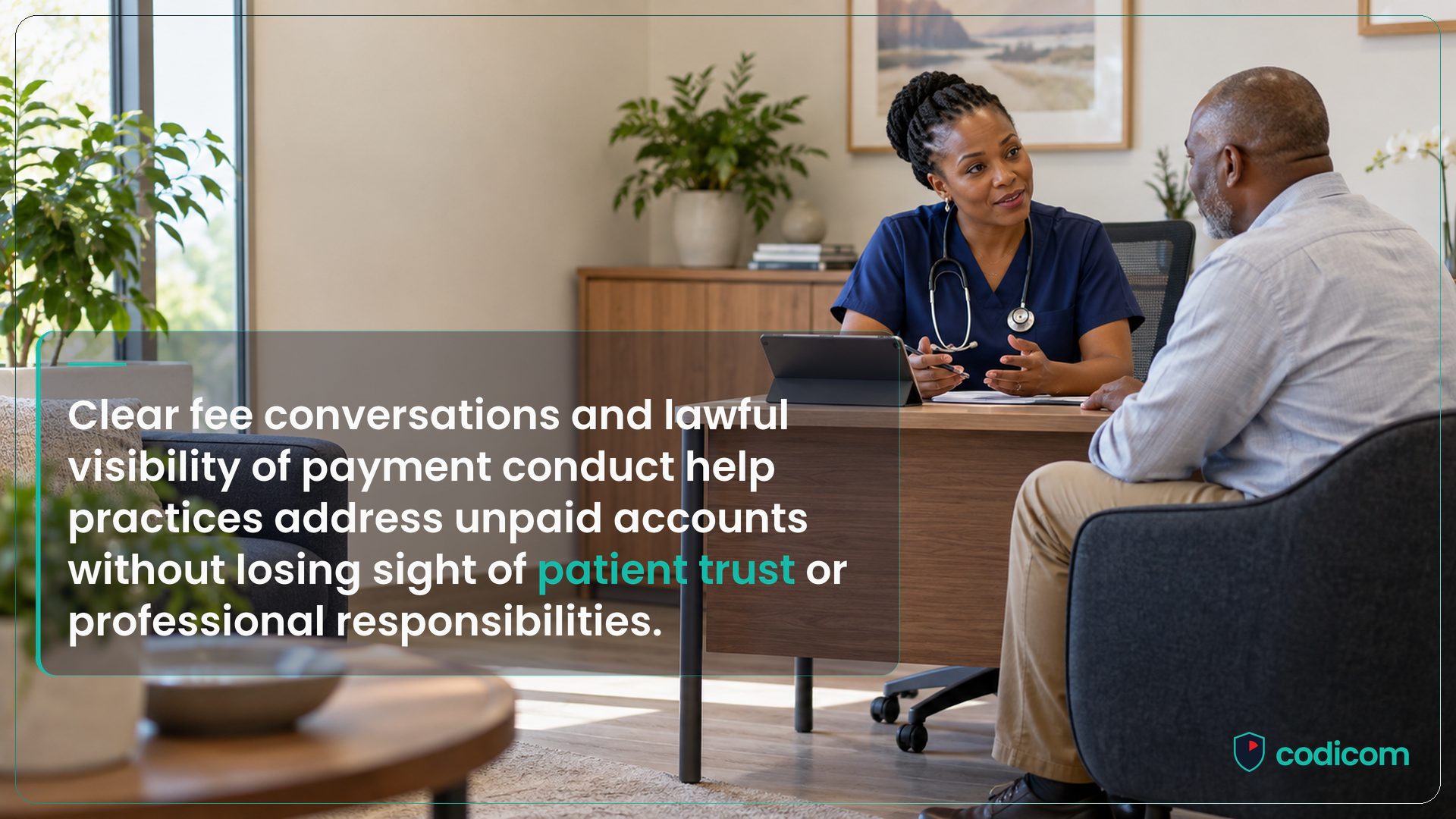
Clear fee conversations and lawful visibility of payment conduct help practices address unpaid accounts without losing sight of patient trust or professional responsibilities.
A patient receives treatment, the practice submits a claim, and an outstanding balance remains. The patient expected medical aid to cover the account. The practice expected the patient to pay the shortfall. By the time someone explains the difference, both parties may feel that an agreement has been broken, although the agreement was never clear.
That gap exposes a useful management question: at what point does your practice establish a shared understanding of payment? If the answer is when an account becomes overdue, the conversation starts too late.
The HPCSA expects practitioners to explain fees before providing services, wherever circumstances allow. Giving financial expectations a deliberate place in the intake process helps patients ask questions and make informed choices about their care. It also gives practices a firmer basis for managing accounts.
Make responsibility explicit
A practice should explain the expected costs, what could change them, who is responsible for payment and when payment is due, so the patient can consider whether they can afford the proposed treatment. Where medical aid is involved, distinguish confirmed cover from assumptions and identify any uncertainty about the patient's contribution.
A signed form can record these terms. The team needs a consistent way to explain the account and invite questions, particularly where payment arrangements are involved.
For example: 'These are the expected fees. This is the cover we have confirmed, and this amount remains uncertain. Let us discuss how any balance will be paid.' The wording will vary, but the purpose is a shared understanding before an account arises.
Healthcare practitioners have a practical task: assign responsibility for this conversation and record the outcome where the billing team can use it. Otherwise, reception may explain one thing while accounts follows up on another.
Use information with judgment
When I speak to doctors, one issue gets a particularly strong reaction: a patient leaves doctor A's account unpaid and moves on to doctor B, who knows nothing about it. codicom's listing service closes that information gap within the network. Moving between practices need not make an unpaid account invisible.
codicom supports informed financial conversations through a payment-conduct platform operating within a closed professional network, accessible only to healthcare practitioners registered with the HPCSA. Its processes are lawful, consent-based and limited to their stated purpose.
A lawful listing gives another practitioner visibility of relevant payment conduct; a lookup helps them prepare for a discussion about fees and payment arrangements. The HPCSA's closed-group listing guidance recognises sharing information among Council-registered practitioners as a matter of inter-collegial interest and assistance, subject to the required safeguards.
An absence of a listing does not guarantee payment. Practitioners must listen, clarify the position and exercise professional judgment. A listing is not an instruction to refuse care, and a practitioner must not refuse treatment at another practitioner's request. Emergency care must never be delayed or made conditional on a lookup result, a payment discussion or payment.
The conversation should remain private and factual. Where concerns arise, explain the practice's terms and explore appropriate arrangements. A patient should leave knowing what has been agreed and whom to contact if circumstances change.
Build fairness into the process
An intake process is incomplete if it explains payment but leaves patients uncertain about queries and follow-up. Give them a clear route to question an account. Resolve administrative errors promptly and distinguish an unresolved dispute from an unpaid, undisputed balance.
Where a practitioner considers a codicom listing, written consent and proper notice form part of the process. Patients must understand the implications and receive written notification of the intention to list, then notification once listed. The practitioner decides who is listed. An account with an unresolved dispute cannot be listed until that dispute is resolved. Listings remain within the closed practitioner network. Once an account is settled in full, the practice must remove the listing.
Practice owners can begin with five questions. Does the patient understand the expected costs? Is payment responsibility clear? Have payment dates and arrangements been agreed? Is payment-conduct information being used lawfully and respectfully? Does the patient know how to raise a query and what follow-up to expect?
Review those answers at the next team meeting. A consistent payment conversation can reduce avoidable confusion and help preserve the patient relationship. Speak to codicom about how patient lookup and the listing service support payment accountability across practices. Learn more


Practice Matters
Practical perspectives for building a stronger, more sustainable healthcare practice — from Codicom.
Subscribe on LinkedIn